
In transdermal and film-based drug delivery, the hard part is rarely finding a formulation that works. It is knowing early enough whether a formulation strategy is worth pursuing at all. A well-designed formulation feasibility programme, built on API characterisation, a clear target product profile, focused screening and ex vivo permeation data, lets development teams rule out weak options in weeks rather than expensively after scale-up.

The expensive part of development is rarely the first experiment. It is discovering six months later that the formulation was built around the wrong assumption. If early formulation screening shows that one formulation cannot deliver the required performance, we have lost a few days and some material. If the same problem appears after a prototype campaign, we may have to reformulate and repeat characterisation. If it appears once clinical material has been prepared, it is no longer a formulation problem. It is a programme problem. Regulators see performance the same way. The EMA guideline on the quality of transdermal patches explicitly links product quality to drug release, adhesion and skin permeation, and FDA guidance on transdermal and topical systems places equal weight on design, manufacturing controls and finished product performance. The earlier those connections are understood, the easier it becomes to build a coherent development strategy.
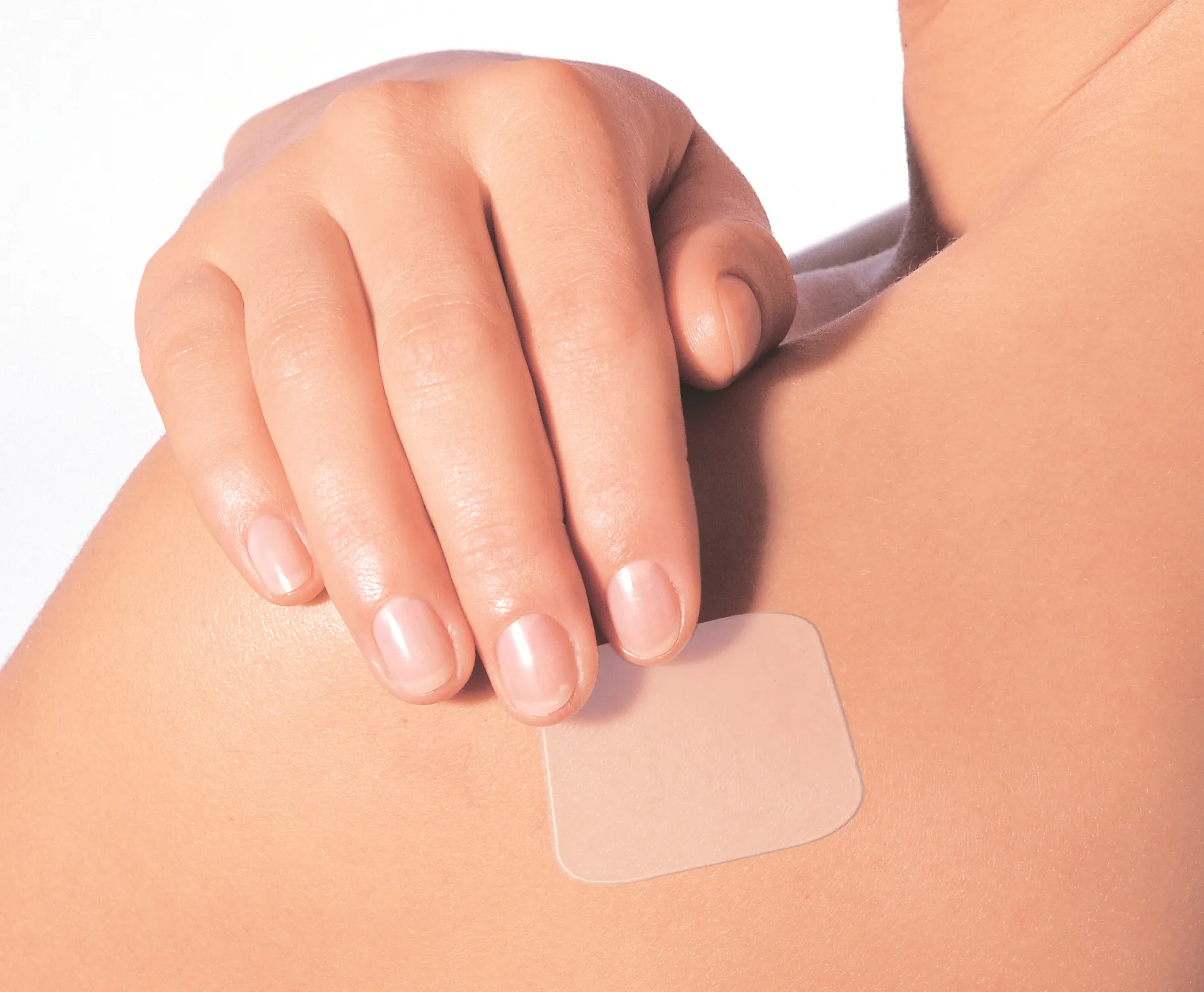
Dose, wear time and patch size all belong in the target product profile from day one, because they shape every formulation decision that follows.
Before any formulation work, we need to understand the molecule. On a paper-based feasibility we may look at molecular weight as an indicator of size and permeability, solubility as a measure of how much drug can actually be carried in the formulation, log P or log D for the balance between solubility and permeability, and melting point as a signal of thermodynamic activity and crystallisation risk. Also no single parameter gives a final answer, together they show whether a realistic route exists.
The second step is defining what success means. What dose are we targeting? What wear time and product size are acceptable? Are there patient use constraints? Translating those answers into quality and process requirements matters, because without them formulation development becomes optimisation with no destination. The target product profile is not a regulatory document that arrives later. It is a development tool that tells us which experiments deserve attention. A molecule can have excellent pharmacological activity and still be very difficult to formulate, particularly in a patch or film, where the formulation has to solve several problems at once. Can we reach the required drug loading without precipitation or crystallisation? Is the API compatible with the polymers, adhesives, plasticisers and enhancers around it? Will the product change over time? And most importantly, does the drug actually leave the formulation and cross the skin or mucosa at the required rate? A film can look uniform, flexible and stable and still fail on that last question.
The later we learn that an assumption was wrong, the more expensive it is to correct. We want to learn about the biggest risks while the experiment is still small, fast and inexpensive.
Leni Breuers, Senior Project and Laboratory Manager R&D, AdhexPharma
Rapid formulation screening starts with a question, not a formulation. Can we achieve the required loading? Can the API sit in the polymer or adhesive without crystallising? Do we need a permeation enhancer? Is the target delivery rate realistic for this concept? Each experiment is then designed to reach one of three outcomes: continue, change or stop. The temptation is not to test everything at once. A better approach is a small number of formulations that distinguish between the most relevant possibilities, such as varying API loading, comparing two or three polymers, or adding a plasticiser or enhancer system. During small-scale prototype manufacturing the aim is not to reproduce commercial manufacturing. It is to ask whether the manufacturing concept works at all, whether the API stays distributed and whether the prototype can be reproduced. Analytical testing should also follow this development strategy. Early screens focus on appearance, thickness, drug content and crystallisation. Formulations that pass move on to adhesion, residual solvent, dissolution and permeation testing, and only a genuinely promising candidate justifies heavier investment in stability, process robustness and scale-up. Design of experiments helps here, showing how formulation and process parameters influence release, adhesion and disintegration, and how they interact.
Permeation is the movement of the API across a biological barrier, and the stratum corneum and mucosal layer are highly effective ones. To become systemically available, a drug must leave the formulation, cross the barrier and reach the circulation. This can be evaluated using a vertical Franz diffusion cell, the formulation sits on the donor side, tissue separates donor and receptor, and samples are drawn over time to calculate cumulative permeation, flux, lag time and, where useful, mass balance.
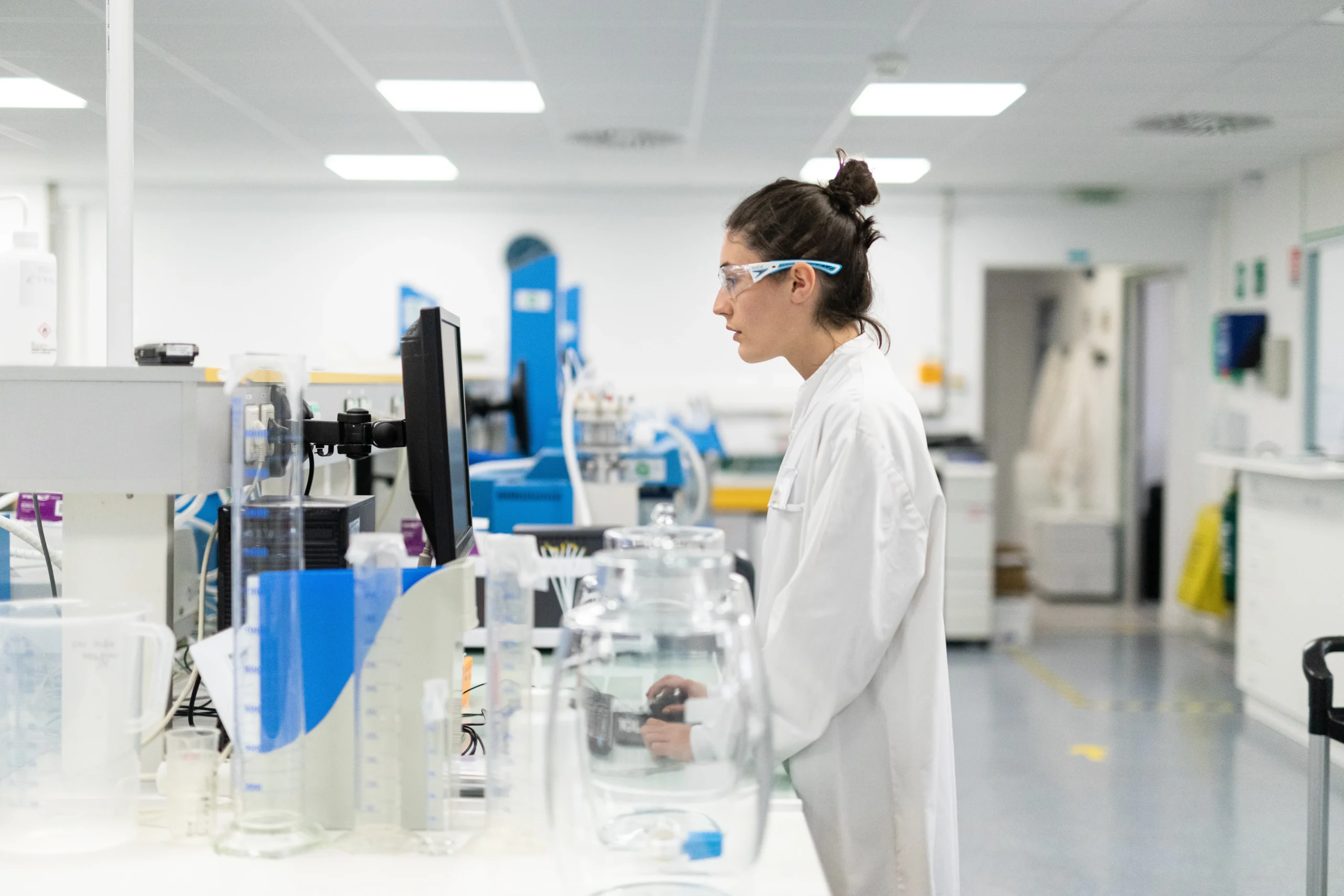
In-house permeation testing at AdhexPharma’s R&D centre in Germany keeps feasibility timelines short and data meaningful.
Consider three prototypes. A has good appearance, a simple process and low flux. B has very good appearance, a slightly more complex process and higher flux. C is complex to manufacture and has low flux. If the target is systemic exposure, the best-looking or easiest formulation is not necessarily the right one. Without permeation data, we might spend weeks optimising A. With it, the real question becomes what makes B deliver better, and whether that advantage can be kept while improving manufacturability. The data do not just rank prototypes. They change the next experiment. In one topical programme, in vitro skin permeation allowed us to distinguish between formulations, understand the influence of individual excipients and optimise a lead candidate to in vitro bioequivalence with the market reference. That candidate was then tested in vivo in a porcine open flow microperfusion model, which samples dermal interstitial fluid to build concentration over time. With 12 replicates across four animals, the study discriminated clearly between formulations with different exposure.
Permeation testing turns development from trial and error into data-driven decision-making. Before clinical studies, we can assess whether a formulation can deliver the drug at the desired rate.
Leni Breuers, Senior Project and Laboratory Manager R&D, AdhexPharma
Peptides Raise the Stakes for Transmucosal Delivery Peptides offer high target selectivity, efficacy at low concentrations and good tolerability, with potential across hormonal, oncology and autoimmune indications. Many of those, including diabetes, osteoporosis and hormone therapy, require long-term treatment, so reliable transmucosal delivery could reduce repeated injections and improve adherence. The challenge is real. At 500 to 5,000 Daltons, peptides diffuse far more slowly than small molecules. They are largely hydrophilic, carry several ionisable groups and are vulnerable to proteases before and during permeation. As part of an EU-funded research project, we developed a mucoadhesive sublingual film containing a GLP-1 receptor agonist, screening bile salt and fatty acid enhancers at different concentrations on porcine buccal and sublingual mucosa. The sublingual route showed greater permeability, reaching around 8 to 9 per cent in the receptor medium after three hours. Early in vivo work on the sublingual mucosa showed bioavailability of roughly 14 to 15 per cent after two hours and around 20 per cent after four. The most common reasons a promising formulation fails after feasibility are insufficient permeation, instability, crystallisation and poor API excipient compatibility. That is why early feasibility at AdhexPharma looks at performance, stability and the manufacturing process together, rather than one at a time. AdhexPharma is a privately owned drug delivery company with more than 40 years of experience in transdermal and topical patches and oral films, including Transfilm®, impregnated matrix patches, RapidFilm® oral dispersible films and Mucofilm® buccal and sublingual films. With around 200 employees across five pharmaceutical buildings in France and Germany, a dedicated R&D centre in Germany, controlled substance capability, EU GMP compliance and US FDA inspection, it supports partners from paper feasibility through to Phase I supply and commercial manufacture.
For organisations assessing whether an API suits an oral film or transdermal patch, or looking for feasibility and permeation data to guide early development decisions, the Pharma D-mand advisory team can connect you with the relevant expertise at AdhexPharma.